From Coaching Inn to Country Stopover
How the coaching inn changed with transport habits, and what its history reveals about choosing a useful countryside stop today.
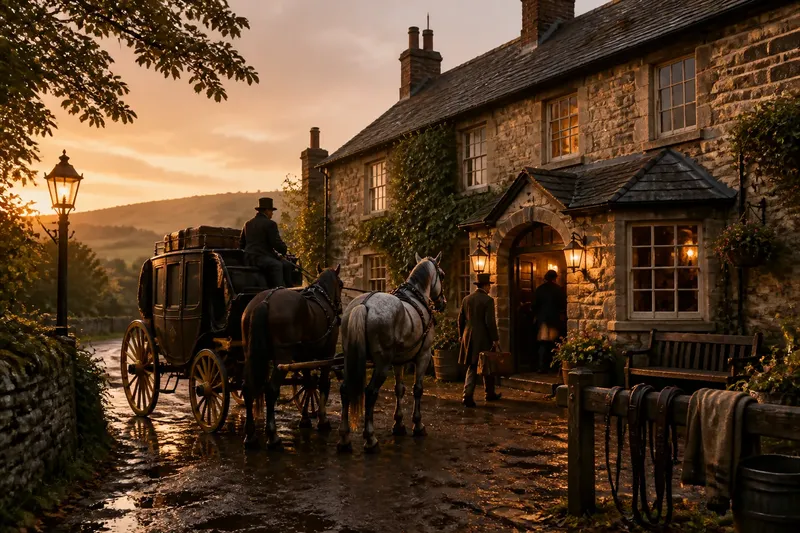
A horse-drawn coach reaches a country inn at dusk, its passengers ready for food, a bed and fresh horses before the next stretch of road. The coaching inn was designed around that pause; the changing meaning of a useful stop becomes clearer when set beside how people travel now.
Its story is not simply one of an old building surviving into a new era. It is a shift in what travellers need from a place between one destination and another: first dependable services for the road, later convenient access for faster journeys, and today a reason to stop that may be as much about the landscape as the onward route.
The road sets the rhythm
Before widespread rail travel, long-distance journeys depended on roads and a network of places where horses and people could rest. Coaching inns clustered along established routes, often in market towns or at points where the road made a natural pause practical.
A coach might carry passengers and parcels on a scheduled route. At an inn, horses could be changed, travellers fed and the vehicle attended to. The stop was part of the transport system, not an optional diversion. Its value lay in helping the journey continue.
That purpose shaped the building. A broad entrance or yard made room for vehicles; stabling served the horses; kitchens and bedrooms met travellers’ needs. The public rooms also made the inn a local gathering place, though its travel function gave it a particular role in the life of the road.
For a traveller, a good stop meant reliable shelter and provisions at the right point in the day. The inn’s character came partly from its position: close enough to the route to be useful, and equipped to make a pause possible.
Rail changes the pause
When railways offered a different way to cover distance, the coaching inn lost some of its central work. Trains could carry people past places where coaches once needed to change horses, and stations redirected movement towards new centres of travel.
The change was uneven. Some inns remained active as hotels, pubs or local businesses; others found themselves beside a road whose traffic had thinned. Their buildings could retain signs of their earlier use even as the reason for stopping there changed.
Rail travel also altered the shape of a journey. A passenger might choose a station as the point of arrival and continue by carriage, on foot or by another connection. A country inn near a station could serve as a night’s lodging or a meeting point, but it no longer had to sustain the coach route in the same way.
Imagine a traveller arriving by train in a small market town and walking to an old inn near the former coaching road. The inn now offers a meal and a bed rather than a horse change; the traveller’s pause is still part of getting onward, but its purpose has moved from transport maintenance to rest and local access.
Motor travel stretches distance
Cars and buses brought another change. Journeys could be planned around personal departure times, road conditions and fuel stops rather than a coach timetable. A stop became less tied to a fixed stage in a route and more dependent on what the traveller needed that day.
For roadside businesses, visibility and access mattered in new ways. A place could attract passing motorists with parking and a quick meal, while an inn set back in a village might draw visitors who chose it for its setting or character. Both could be useful, but they answered different travel needs.
The car also made it easier to pass through a village without entering it. Roads that once brought travellers directly to a coaching inn could become through-routes, while bypasses shifted traffic away from older centres. A building’s relationship to the journey therefore depended not only on what it offered, but on how the road carried people past it.
Look at the approach as well as the façade. A former inn beside a narrow main street tells a different story from one now reached by a signed turn off a faster road. The first may be woven into village life; the second may function as a destination in its own right.
Stopover or destination?
Today, “stopover” can mean a practical overnight pause, a place to break a drive, or a small destination chosen for its surroundings. The old coaching inn offers a useful way to think about these meanings: a stop is shaped by the transport available, but also by what makes a traveller willing to leave the route.
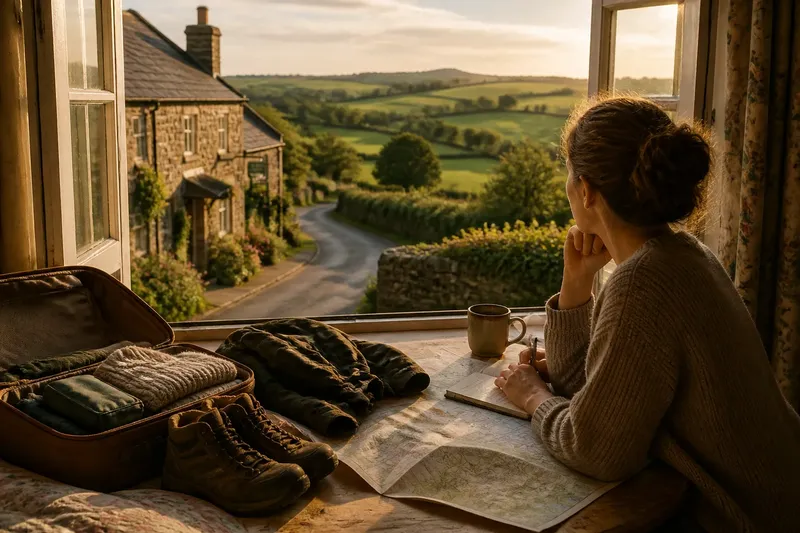
For a short break, that might mean choosing a village with a walk from the door, a local bus connection or a pub that serves an evening meal. For a longer journey, it may mean staying somewhere where the car can remain parked while the traveller explores nearby lanes or footpaths.
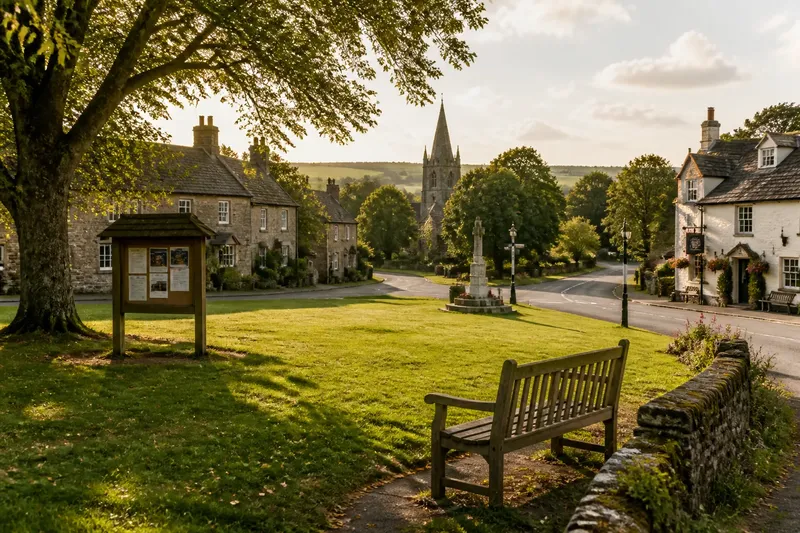
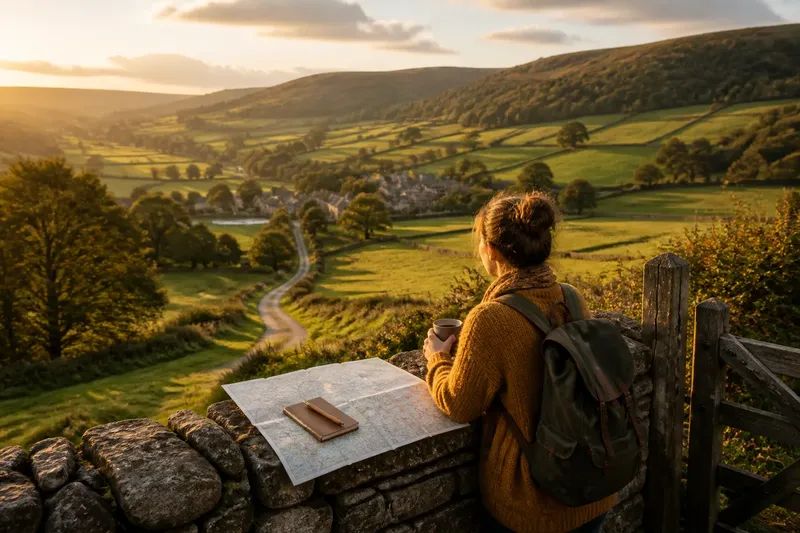
A stopover need not be packed with activities to feel worthwhile. A stretch of riverside path, a view across pasture or a chance to browse a village shop can make a pause feel connected to its place rather than interchangeable with any roadside service area.
Say you are driving through a rural district and want to break the journey before dusk. You choose an inn near a canal towpath, park on arrival and take a short walk before supper; the observable result is a break that includes movement and a sense of place, without turning the evening into another long excursion.
Reading the building
Old coaching inns often reveal their former role through practical details. Look for a large arch or carriage entrance, a yard behind the main building, sturdy ground-floor rooms or surviving stable blocks. Such features can suggest how vehicles, horses and guests once moved through the site.
Not every old inn retains these clues, and a building’s appearance alone cannot establish its full history. Local interpretation boards, heritage listings or information from the property can help distinguish a documented coaching connection from a name or story adopted later.
Notice how the building sits in the settlement, too. An inn beside a market square may have served local trade as well as road travellers. One on an exposed route beyond the village may have offered a more direct refuge for people and animals making a long journey.
These observations make a visit more attentive without requiring a formal tour. The useful question is not only “What did this place used to be?” but “Which parts of its present setting still invite a traveller to pause?”
Choosing a country stop
When selecting a countryside stopover, match the place to the journey rather than relying on the word “historic”. A characterful inn may be appealing, but its usefulness also depends on arrival time, access, food arrangements and what you want to do once you have put your bag down.
- Check the route: See whether the inn lies on a road you are already using or requires a detour that suits your day.
- Check arrival arrangements: Confirm how late you can arrive and where you can leave a vehicle.
- Check evening options: Find out whether food is available on site or whether the village has another suitable choice.
- Check what is reachable on foot: A nearby lane, riverside path or village centre can make a short stay feel less like a night beside the road.
- Check onward travel: If you are not driving, look at local bus or rail connections and the distance from the stop to the inn.
Details such as opening times, access and services can change, so check directly with the inn or relevant transport operator before setting out.
What makes a stop useful?
A coaching inn once earned its place by keeping a journey moving. The country stopover has a broader brief: it may ease fatigue, connect a visitor to a village or turn a stretch of road into part of the experience.
Why were coaching inns placed along roads?
They served travellers who needed food, lodging and fresh horses at intervals along a route. Their position made it possible to pause without abandoning the journey’s direction.
What happened to coaching inns after railways arrived?
Many lost some of their transport role as trains took over long-distance travel. Some adapted as hotels, pubs or local businesses, while others became less central to travel through the area.
Can an old coaching inn still be a practical stop?
Yes, if its current access, facilities and location fit the journey. Its historic character can add interest, but present-day opening arrangements and onward connections matter just as much.
How can I tell whether an inn was a coaching inn?
Architectural features such as a carriage entrance or former stable yard can offer clues, but they are not proof on their own. Look for local heritage information or ask the property about its documented history.
The phrase “coaching inn to country stopover” describes more than a change of building use: it marks a change in why travellers pause. On your next rural journey, notice whether a chosen stop helps you continue, gives you a place to rest, or makes the surrounding landscape part of the reason for stopping.