The Itinerary Trap: Why Every Hour Need Not Have a Job
A countryside break itinerary with deliberate gaps is easier to adapt, leaving room for slow roads, changing weather and the places you did not expect to enjoy.
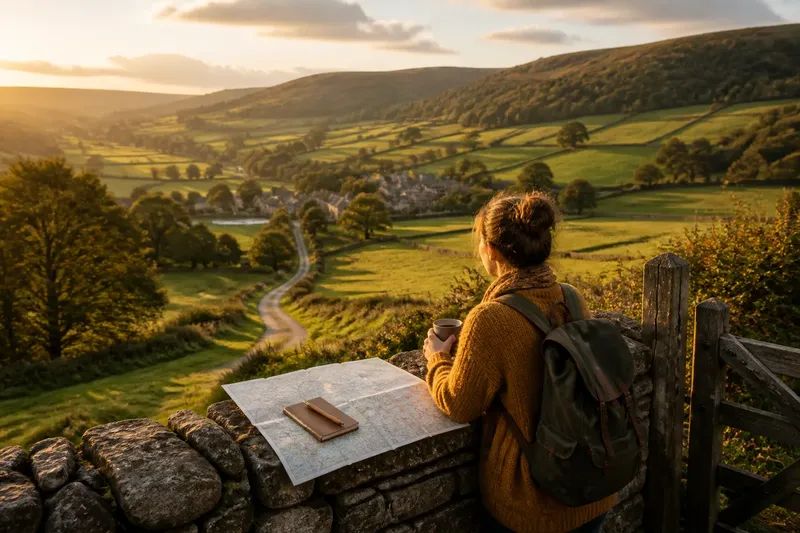
You have marked a farm shop, a riverside walk and a pub lunch on the map, with a church visit squeezed in before the drive back. Then a narrow lane slows you down, the path is muddier than expected and the afternoon starts to feel like a race. A countryside break itinerary works better when it gives the day room to change shape.
An open patch in the plan is not wasted time. It is space for the unplanned things that make a rural outing feel particular: watching a flock move across a field, lingering over tea, or choosing a shorter walk when the weather turns. The aim is not to do less for its own sake, but to decide which parts of the day deserve a firm place and which can stay loose.
Choose the day’s anchor
Begin with one activity that gives the outing its shape. It might be a walk to a viewpoint, a visit to a local garden, a market morning or lunch at a place you particularly want to try. Call this the anchor: the event around which the rest of the day can flex.
Choose an anchor for a real reason, rather than because it fills a gap on a timetable. Check practical details such as opening times, booking requirements, access and whether the activity depends on weather. Those details help you decide when it belongs in the day and what kind of alternatives might suit.
If the anchor is a walk, for instance, note where you can shorten the route or turn back. If it is a booked meal, treat the booking time as fixed and leave the surrounding hours open. In either case, you have one reliable point of reference rather than a chain of appointments.
Map the travel honestly
Once the anchor is clear, look at the journey between your starting point and the activity. A map may make two places appear close, but country roads, single-track stretches, livestock or a search for somewhere to park can alter the feel of the trip. Plan around the route you will actually use, not a straight line across the landscape.
Use a paper map or a mapping app to identify the main road, likely turns and a sensible stopping place. If mobile reception is uncertain, save the route for offline use or write down the key junctions. Keep an eye out for public car parks and signed access points rather than assuming every attractive lane has somewhere suitable to pull in.
Then decide how much travel you are willing to add around the anchor. A second attraction may be close enough to be optional; another may require a detour that changes the whole character of the day. Leave the detour out unless it genuinely matters to you.
Build a loose sequence
Put the fixed elements in a simple order: departure, anchor, any essential meal or booking, and the return. Do not assign a separate task to every remaining part of the day. A loose sequence is easier to remember and easier to adjust than a timetable with a precise start for each stop.
For each fixed point, ask what needs to happen before it. You may need to allow time to park, find a trail entrance or walk from the village edge. Treat those practical transitions as part of the outing rather than as invisible gaps that can be squeezed away.
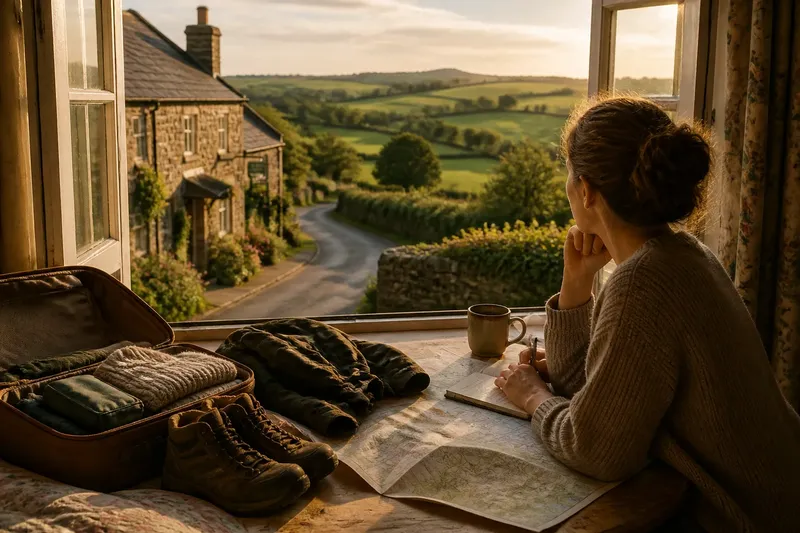
Say you are staying in a cottage outside a small market town and have booked lunch at a village pub after a morning walk. You choose a nearby footpath as the main activity, save a second loop as an option, and leave the hour before lunch unassigned. If the first route is slow or the ground is wet, you can take the shorter loop and still arrive without hurrying; if the walk ends early, you can browse the town or sit with a drink.
Keep alternatives ready
A flexible plan works best when you have a few alternatives in mind, but not a second itinerary to obey. Choose options that differ in effort or setting: a short village stroll instead of a longer hill walk, a covered local attraction instead of an exposed viewpoint, or a café stop instead of another drive.
Keep these choices nearby in a note on your phone or on the map. Include useful details such as whether a place is indoors, where access begins, and whether it is likely to involve another drive. You do not need to research every possibility in depth; the point is to make a simple change easier if the day calls for one.
Check the relevant site information, product label, manufacturer instructions or local rules where they affect access, bookings or equipment; follow those directions and contact the relevant provider if something remains unclear.
Let the day respond
Before setting out, notice what could reasonably change: rain, tired legs, an unexpectedly busy car park or a slow meal. You do not need to predict every snag. It is enough to know which part of the plan is fixed and which part can be dropped without disappointment.
When conditions change, pause before adding another stop to compensate. Ask whether the anchor still suits the day, whether a shorter option would be kinder, and whether going back to your base is already a good choice. Turning around early can be a considered decision, not a failure to complete the plan.
On a walking day, for example, imagine that a shower arrives while you are still near the village. You might leave the higher route for another visit and spend the open part of the afternoon at a nearby tearoom. The observable result is a calmer outing with fewer wet miles, not a lost day.
What should stay flexible?
How many planned stops make sense?
Start with the anchor and add only a stop that serves a clear purpose, such as a meal or a place you have been keen to visit. If the day already involves a long drive or a substantial walk, one main activity may be enough.
What belongs in a travel buffer?
Allow for finding parking, walking to the start of a route and dealing with small delays on rural roads. Keep the buffer unlabelled in the schedule so it can absorb those transitions rather than becoming another appointment.
What if the weather changes?
Match the alternative to the conditions: a sheltered path, a short town wander or an indoor visit may suit better than pressing on with an exposed route. Check access and opening information before you set out if the alternative depends on a venue.
How do you avoid wasting a free afternoon?
Give the open time a gentle purpose, such as resting, browsing local shops or choosing a walk after lunch, without fixing a start time. If none of those appeals, returning to your accommodation is a valid use of the afternoon.
Review before you leave
Take a final look at the plan the evening before or over breakfast. Confirm the anchor’s practical details, check the route and weather, and decide which optional idea you would prefer if conditions are kind. Keep the plan brief enough to hold in your head.
A countryside break itinerary should help you make decisions, not keep score. When you leave one stretch of the day unclaimed, you can respond to the actual place and the mood of the people travelling with you. That small change often makes the day easier to remember for what happened in it, rather than for how many boxes it contained.