A Rainy Arrival Evening with One Pot and What You Packed
A rainy arrival evening can feel settled without another outing: use familiar provisions, one pot and the comforts already packed to make a simple first supper.
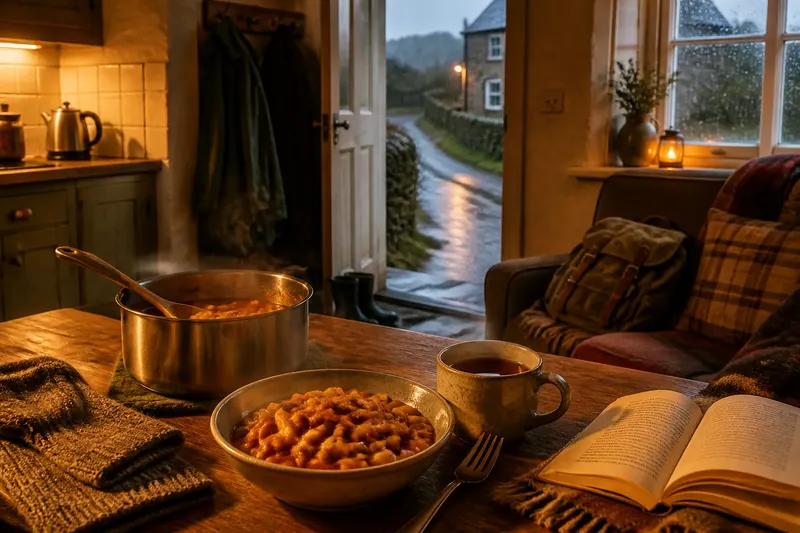
The lane to the cottage is shiny with rain, your coat is damp at the cuffs, and the last thing you want is another drive for supper. A rainy arrival evening can be made easier with a familiar meal, one pot and the comforts already in your bag. The aim is not to turn the accommodation into a project; it is to make the first few hours feel manageable.
A familiar arrival
Imagine you have reached a small rented cottage after a slow journey through wet country lanes. You brought a jar of tomato sauce, dried pasta, a tin of beans, tea bags and a few apples, along with a paperback, warm socks and a charger. The kitchen has a hob, a saucepan, bowls and basic cutlery, but you have not yet checked every cupboard.
That starting point matters. Choose supper from provisions you already recognise, rather than trying to reproduce a complicated meal in an unfamiliar kitchen. Pasta with sauce and beans is forgiving: the ingredients can be combined in one pot, and the result does not depend on finding a particular spice or serving dish.
Before unpacking fully, set the food on a clear surface and check what is available for cooking and washing up. Follow the accommodation’s instructions and any relevant food labels; if a required item or safe facility is missing, choose a ready-to-eat option instead of improvising.
Settle before supper
Wet arrivals can make small tasks feel oddly demanding. Put bags somewhere they will not block the doorway, hang damp outer layers where the host indicates, and change into dry clothes. A familiar pair of socks or a soft jumper can do more for comfort than an extra item bought on the way.
Keep the first unpacking selective. Take out toiletries, sleepwear, medication and the things needed for supper, but leave the rest in the bag until you know where it belongs. This avoids spreading travel clutter across a space you have only just entered.
Say you arrive with a paperback and a small torch in your day bag, but the room is dim and the rain has made the walk to the car unattractive. You can place the torch within reach, make tea while the pasta cooks, then read at the table as the room warms. The observable result is a settled corner and a meal without another trip outside.
Cook with one pot
For the invented cottage evening, the saucepan is the only cooking vessel needed. Bring water to a boil, cook the pasta according to its packet, and drain it if the pan and sink arrangement make that straightforward. Stir in the tomato sauce and drained beans, then warm the mixture through; if the sauce is too thick, loosen it with a little cooking water.
There is no need to chase a perfect recipe. If the kitchen lacks a colander, use a method you are comfortable with or choose pasta that can be served with its cooking liquid. Avoid handling a hot pan in an unfamiliar space if the layout feels awkward; a simpler cupboard meal is a sound alternative.
Use bowls and cutlery already provided, and leave elaborate seasoning out of the plan. A little salt or dried herb from your provisions can be enough, but the meal should still work without it. Put the saucepan to soak while you eat, so washing up later is less of a chore.
Make the room comfortable
After supper, use what you packed to create a modest place to pause. Keep a book, knitting, a notebook or downloaded audio close by, and make a hot drink if the kettle is available. A phone can be put aside to charge, but save the address and host’s contact details somewhere accessible before settling in.
Let the room’s own arrangements guide you. If there is a table, use it for food and reading; if there is a small sitting area, keep the meal there rather than moving furniture. Leave muddy shoes and wet kit where they can dry without touching delicate surfaces, and follow any house guidance about heating or ventilation.
There is no need to fill the evening because the weather has cancelled a possible walk. A quiet meal and a familiar pastime can be the whole plan. If the rain eases, you can look at the lane from a sheltered doorway without turning that glance into a new outing.
Questions for the first evening?
What if the kitchen has no useful pan?
Use provisions that need no cooking, such as bread, fruit, cheese or a ready-to-eat tin, if you have packed them and can store them appropriately. If you have no suitable food, contact the accommodation host about nearby options rather than assuming a shop will be open.
How much should I unpack?
Take out only what you need for supper, washing and sleep, then leave the remaining bags closed. Once you have seen the room and its storage, you can decide what belongs on a shelf and what is better kept packed.
What can I do if the meal is too small?
Pair it with another provision already in your bag, such as bread, fruit or a snack you normally eat. If nothing suitable is available, make a note for breakfast planning rather than making an uncomfortable journey in poor conditions.
Should I still go out if the rain stops?
Decide by checking the light, the route and how tired you feel, not by treating an outing as an obligation. Staying in is a reasonable choice when the journey has already taken more effort than expected.
Keep tomorrow simple
Before bed, put a mug and breakfast provisions somewhere easy to find, and check where your coat and shoes are drying. Note anything you will need to ask the host about in the morning, such as rubbish arrangements or the best place to leave wet footwear, rather than searching the property late at night.
The useful lesson from this rainy arrival evening is to let familiar provisions and already-packed comforts carry the first night. One pot, dry clothes and a quiet activity can turn an awkward arrival into a settled one, while leaving the next day open for whatever the countryside and the weather allow.